
FAQ Help Center
Answers to common questions about shipping, returns, and order updates. If you can’t find what you need, send us a message, and we’ll help.
Returns & Exchanges
Returns are accepted within 30 days of delivery. The buyer is responsible for return shipping. A 15% restocking fee applies. Items must be unused, uninstalled, and returned in original condition.
Email returns@squirrelboxes.com with your order number and a description of what you are returning. We’ll send return instructions. You can also use our contact page to begin the process.
Please review the item details and specifications carefully before placing your order. We’re unable to offer refunds for orders placed in error or due to a change of mind. If you would still like to return an item, our standard return terms apply (buyer pays return shipping and a 15% restocking fee).
A 15% restocking fee helps offset the costs we incur for returned items, including original manufacturer shipping expenses and the labor required to inspect and verify that the product is in resalable condition, repack it as needed, and return it to inventory for resale.
Please review the item details and specifications carefully. We do not offer direct exchanges. The original item must be returned per our return policy, and a new order must be placed.
Replacement parts will be shipped at no cost for items damaged in transit. Please use our contact page to report any damage within 48 hours of delivery and include clear photos of the damaged parts and packaging so we can resolve it quickly.
Shipping Questions
Yes. We ship squirrel boxes throughout the United States. Shipping costs and delivery times are calculated at checkout.
Yes. Many customers choose to donate squirrel boxes to wildlife rehabbers or give them as gifts. Donated boxes help create safe habitat for squirrels in areas where shelter is limited.
Shipping times vary based on your location and the shipping method selected. Estimated delivery times and costs are calculated and displayed during checkout once you enter your shipping address.
Business days are Monday through Friday, excluding major holidays. Weekends (Saturday and Sunday) are not business days.
Once your order ships, you’ll receive a shipping confirmation email with your tracking number. You can also check your order status and tracking details by logging into your account on SquirrelBoxes.com and viewing your order.
Tracking updates may take time to appear. In some cases, a label is created before the carrier scans the package, or the carrier may miss scans while the package is moving between facilities. If your tracking hasn’t updated after 48 hours (or 72 hours over weekends/holidays), please contact us with your order number and we’ll help.
NESTING BOX QUESTIONS
Our mission is to protect squirrels by providing safe, durable nesting boxes that replace lost habitat. Every box placed helps create shelter for squirrels who cannot ask for help but still need it.
The most important factors are safety, proper design, placement, and protection from weather and predators. Camera viewing should always be secondary to the well-being of the squirrels.
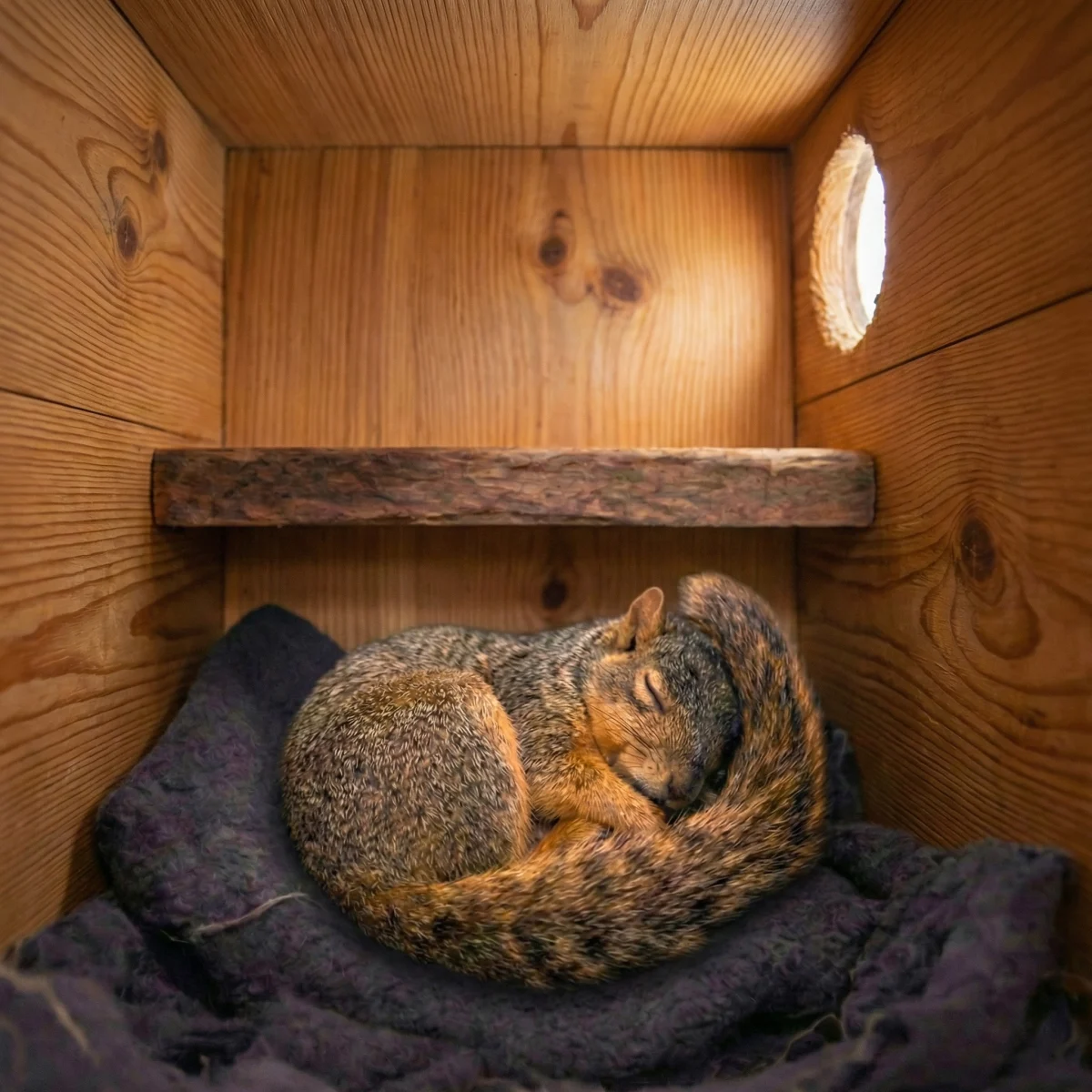
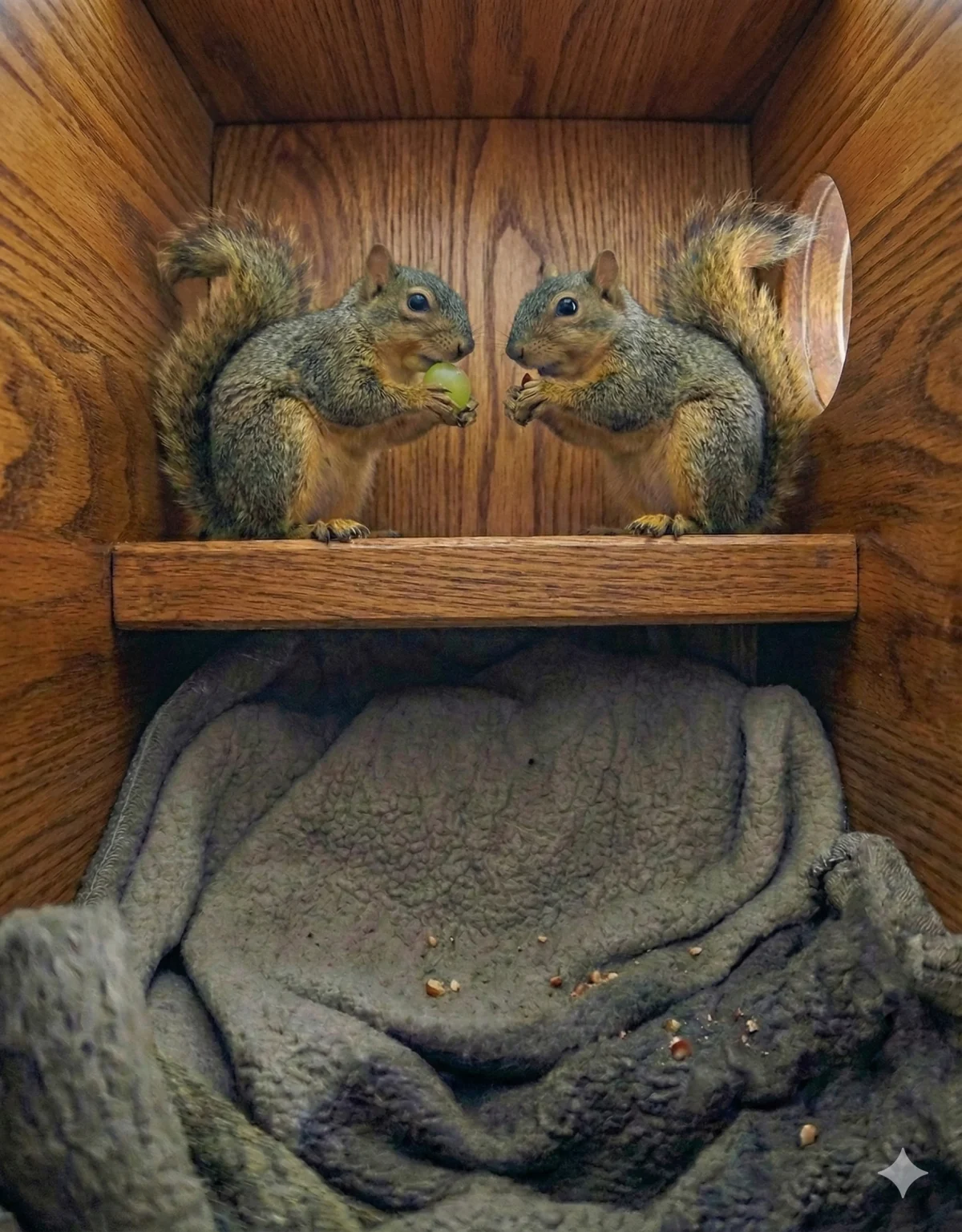
Squirrel nesting boxes are specially designed shelters that provide squirrels with a safe place to sleep, nest, and raise babies. Unlike generic wildlife houses, our squirrel boxes are built specifically for squirrel behavior, safety, and year-round use.
Urban development and tree removal reduce the number of natural nesting cavities. Squirrel boxes replace lost habitat by providing secure shelter where squirrels can rest, overwinter, and protect their young from the weather and predators.
Our squirrel boxes are designed to be predator-resistant. Features such as enclosed entry hallways, offset access points, and reinforced materials help protect squirrels from raccoons, cats, owls, and other predators. No wildlife box is 100% predator-proof, but our designs greatly reduce risk.
Our squirrel boxes are made from durable composite materials that resist rot, moisture, and warping. Unlike untreated wood, these materials provide long-lasting protection with minimal maintenance.
Yes. Squirrels regularly use properly placed squirrel nesting boxes for sleeping, nesting, and winter shelter. Occupancy depends on location, placement, and timing, and squirrels may take days or weeks to move in.
Install squirrel boxes 10–20 feet off the ground on a tree or sturdy structure. Place the entrance away from prevailing winds and direct sunlight when possible. Quiet locations with nearby trees work best.
Some squirrels move in quickly, while others may take several weeks or months. Providing a squirrel box offers a safe option, but squirrels decide when and if they use it.
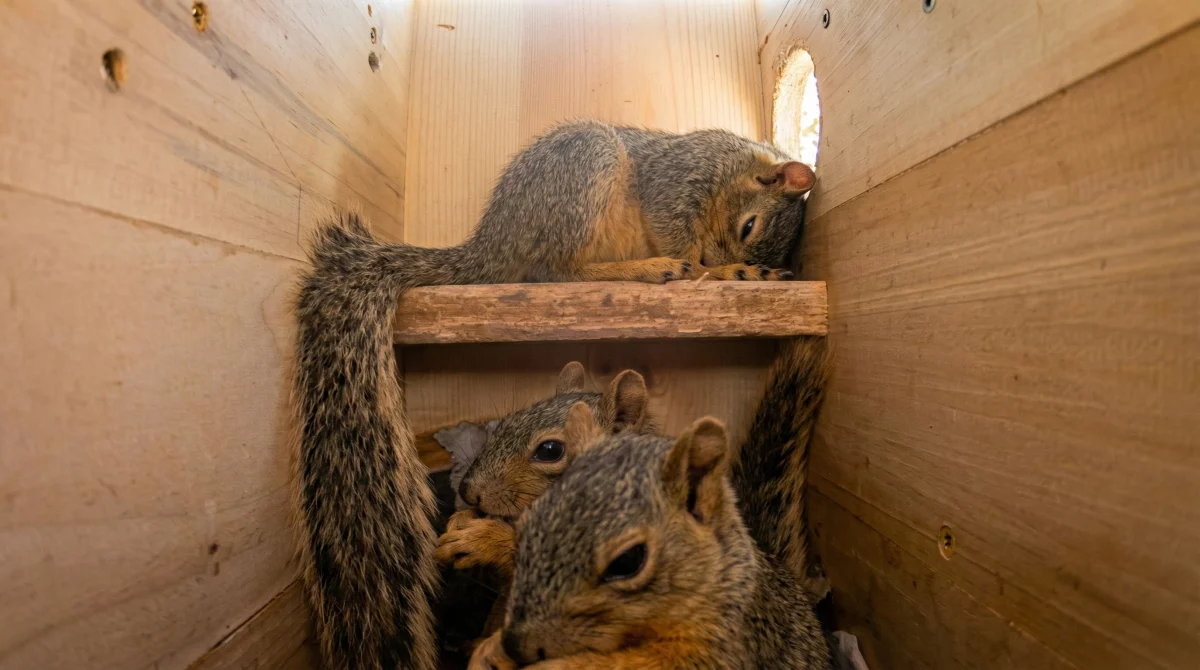
Yes. Squirrels may share nesting boxes during cold weather for warmth or use them to raise litters. A single box may also be used by different squirrels throughout the year.
Minimal cleaning is recommended. Squirrels often maintain their own nests. If cleaning is necessary, do so outside of breeding season to avoid disturbing babies.
Yes. Squirrel nesting boxes are especially important in winter, providing insulation and protection from cold temperatures, wind, and snow. Many squirrels rely on boxes for overwintering.
Our squirrel boxes are designed to withstand rain, heat, cold, and seasonal weather changes. Proper ventilation and drainage help keep the interior dry and comfortable year-round.
Camera Box Questions
Only specific models are designed to support cameras. The Watchtower Drey is a camera-capable model built with proper spacing, sight lines, and mounting considerations for safe observation. Always refer to the individual product listing to confirm whether a model supports a camera.
No. Cameras are not included with any Squirrel Box. Squirrel Boxes designs and manufactures only nesting and shelter boxes. We do not manufacture, sell, or bundle cameras. Any camera shown in photos or videos is for demonstration purposes only unless explicitly stated otherwise.
No. Cameras are not installed by default. Camera installation, setup, and configuration are the responsibility of the customer and must follow both the camera manufacturer’s instructions and Squirrel Boxes safety guidelines.
The Watchtower Drey is designed for use with specific camera systems and is recommended for compatibility with: Arlo Pro Series, Arlo Ultra Series, Google Nest Outdoor Camera, Blink Outdoor 4, Blink Outdoor Pro 4. For best results, models such as Arlo Pro 4, Arlo Pro 5s, or Arlo Ultra 2 are recommended. If using an Arlo Ultra model, an Arlo SmartHub is required.
Note: Squirrel Boxes provides compatibility guidance only for fit and placement. We do not provide installation, setup, app, connectivity, or troubleshooting support for cameras. For help with camera operation or configuration, please contact the camera manufacturer directly.
No. Cameras do not affect squirrels when used in a camera-capable box as long as spotlight features are turned off and LED indicator lights are disabled. When installed correctly, cameras operate silently and without disturbance, allowing squirrels to behave naturally inside the box. Observation should never come at the expense of comfort or safety.
No. Cameras are completely optional. Squirrel Boxes are designed first and foremost as safe shelters. Many customers choose not to use cameras and still provide excellent housing for squirrels.
We don’t recommend it. Choose a camera-compatible model like the Watchtower Drey for the best fit and protection.
NUTS & FOOD QUESTIONS
Anuts.com offers a wide range of nuts, including mixed nuts, walnuts, pecans, and hazelnuts, all in their natural shells. This variety ensures your squirrels get a balanced diet and enjoy a range of flavors and textures.
Yes, squirrels can eat raw nuts. In fact, raw, unsalted nuts are the healthiest option for squirrels. Avoid giving them roasted or salted nuts, as these can be harmful to their health.
Yes, squirrels should avoid nuts like macadamia nuts, as they are potentially toxic. Additionally, flavored or salted nuts should never be given to squirrels.
Squirrels enjoy both, but they particularly love unshelled nuts because cracking the shell is part of their natural foraging behavior and helps keep their teeth strong.
Dental Health: Gnawing on shells helps squirrels maintain strong and healthy teeth. It’s a natural way to keep their teeth in check and prevent overgrowth.
Mental Stimulation: Cracking open shells provides mental stimulation for squirrels, keeping them engaged and active.
Natural Diet: Nuts in the shell mimic the natural diet of squirrels, ensuring they get the nutrients they would find in the wild.
While squirrels can eat peanuts, it is best to offer them sparingly. Peanuts are technically legumes, not nuts, and they lack some of the essential nutrients that true nuts provide.
No, squirrels have a diverse diet that includes seeds, fruits, vegetables, fungi, and even insects. Nuts, however, are a favorite due to their high-energy content.
Absolutely! If you have a tree that produces safe nuts like acorns, walnuts, or pecans, squirrels will happily forage for them. Just ensure the nuts are fresh and free from mold.
Squirrels bury nuts as a way to store food for the winter. They rely on their excellent memory and sense of smell to retrieve these hidden treasures when food is scarce.
Yes, but stick to raw, unsalted, and unflavored nuts. Avoid nuts with additives, coatings, or sweeteners.
Feeding squirrels occasionally is fine but try not to make them dependent on human-provided food. It’s essential for squirrels to forage and maintain their natural instincts.
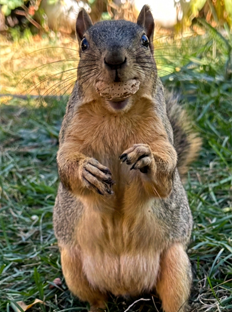
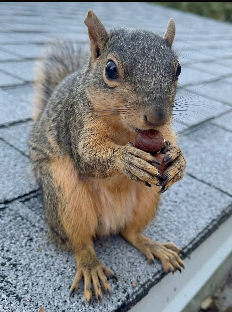
Ready For a Box?
Bring more wildlife moments to your backyard with a simple, durable nesting space designed for long-term outdoor use. If you’re ready to get started, browse our boxes or learn the best placement tips for your space.